
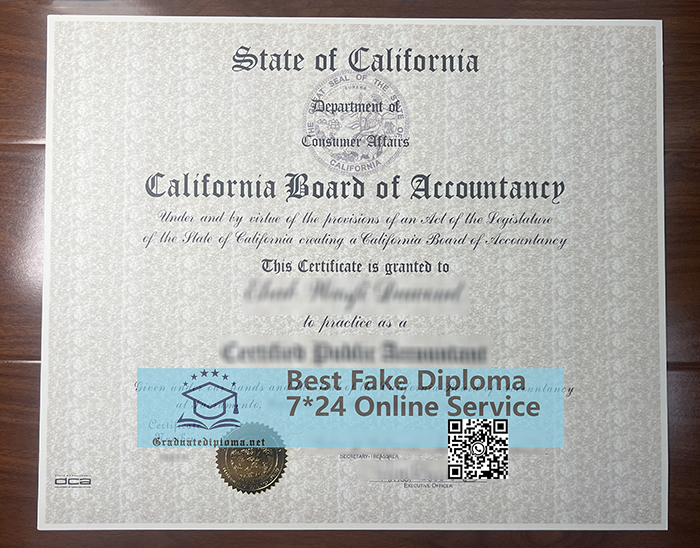
The California Board of Accountancy (CBA) certificate represents the definitive license for practicing as a Certified Public Accountant in California. The CBA, a regulatory body under the Department of Consumer Affairs, issues this credential and oversees the entire licensure process. In 2026, however, the journey toward this certificate looks markedly different from previous years, largely because a newly modernized framework now offers greater flexibility for aspiring CPAs.
A New Era for Licensure
A landmark piece of legislation, Assembly Bill 1175, took effect in January 2026 and fundamentally reshapes the path to becoming a CPA. First and foremost, the new law eliminates the long-standing 150-semester unit requirement. Instead, the primary educational focus now centers on earning a bachelor’s degree with a specific concentration in accounting. As a result, this strategic shift removes financial barriers while creating a more efficient and accessible route into the profession.
What Are the Requirements for 2026?
The new framework introduces a transitional period during 2026 through 2028, during which the CBA accepts both the old 150-unit rule and the new degree-concentration rule. Regardless of which path you choose, the foundational requirements remain consistent:
- Education: You will need a bachelor’s degree. Under the new rule, this requires 24 semester units in accounting, 24 units in business-related courses, and 3 units in ethics.
- Examination: You must pass the Uniform CPA Exam, a rigorous four-part test covering Auditing (AUD), Business Environment (BEC), Financial Accounting (FAR), and Regulation (REG).
- Experience: You will need two years of general accounting experience under a licensed CPA. Fortunately, you can reduce this requirement by one year with a qualifying master’s degree, or by six months with a recognized accounting certificate.
How Hard Is It and How Long Does It Take?
The CPA Exam presents a significant challenge, typically demanding 120–160 hours of study per section, so the total process requires a considerable time investment. Candidates must pass all four sections within an 18-month window, which inevitably adds pressure to the preparation schedule. Even so, the new flexibility allows you to enter the workforce sooner or leverage higher education to shorten the overall timeframe. WhatsApp: You can contact us here. Consequently, many candidates find the revised structure more manageable than before.
Frequently Asked Questions
1. What changed with the 150-unit rule?
The 150-semester unit requirement no longer exists. A bachelor’s degree with an accounting concentration now replaces it, effective January 1, 2026.
2. How much work experience do I need?
The baseline requirement is two years of supervised general accounting experience. However, you can reduce this to one year if you hold a master’s degree, or to 1.5 years with an approved accounting certificate.
3. When does the new law take effect?
The legislation took effect on January 1, 2026, and the new requirements officially apply to all applicants starting from this date.
4. Can education substitute for experience?
Yes. A master’s in accounting, taxation, or tax law can substitute for one year of experience, while certain accounting certificates can substitute for six months.
5. What are the ethics requirements?
Beyond the 3 semester units of ethics education, you must also pass the Professional Ethics for CPAs (PETH) exam with a score of 90% or higher.